Best AI Agent Frameworks in 2026: Top 10 Compared
Choosing an AI agent framework in 2026 is harder than it looks, and not because the options are bad. LangGraph, CrewAI, the OpenAI Agents SDK, Google’s ADK, PydanticAI, and a wave of TypeScript frameworks all shipped stable releases in the past year. Two older frameworks merged into a new one. Every single one of them added MCP support. If you’re trying to pick the best AI agent framework for a new project, the honest starting point is that several of them are good, and the right one depends on your language, your team, and where the agent will run.
What this covers
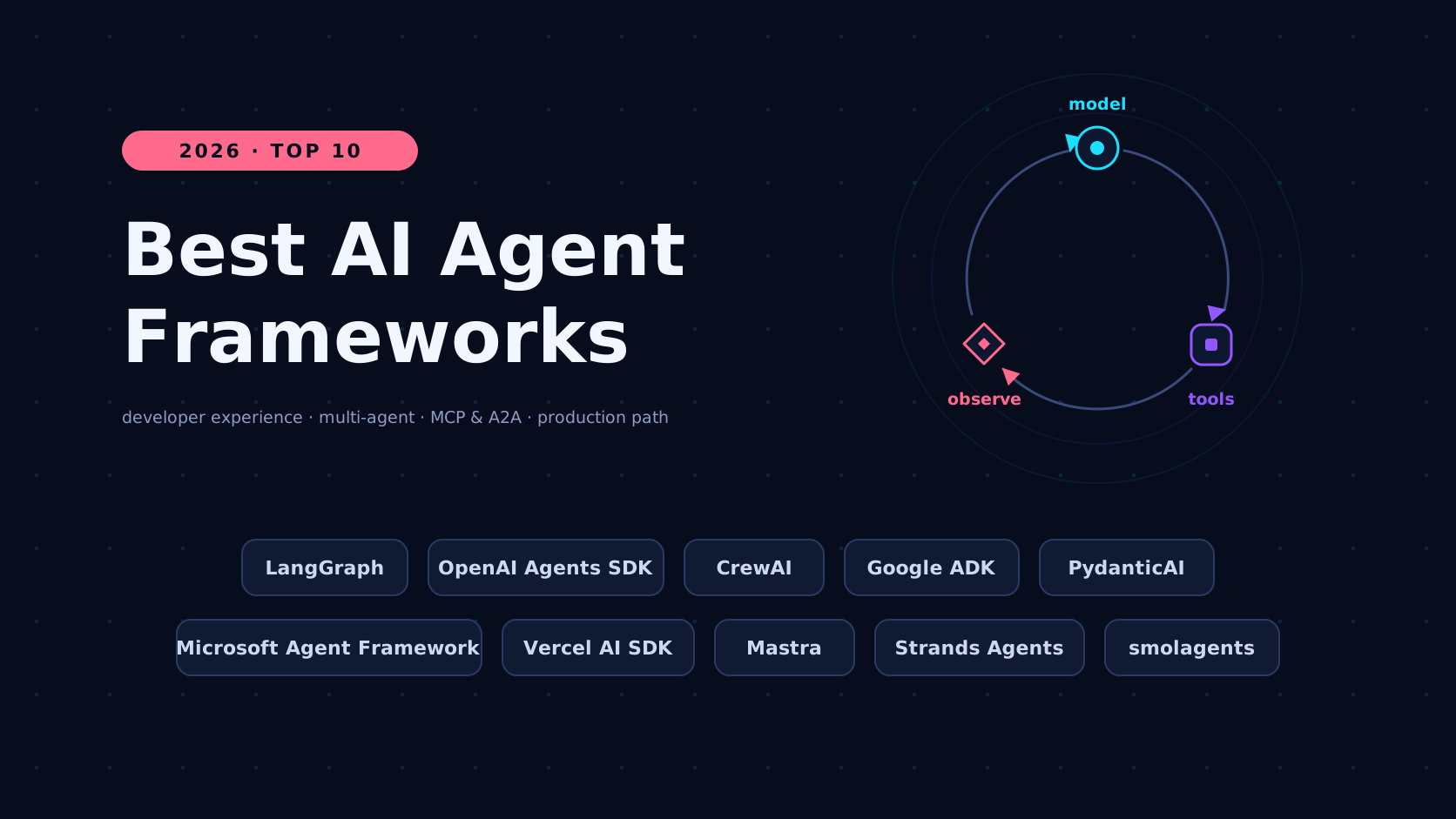
A comparison of the 10 best AI agent frameworks in 2026 (LangGraph, the OpenAI Agents SDK, Google ADK, Microsoft Agent Framework, CrewAI, PydanticAI, Vercel AI SDK, Mastra, Strands Agents, and smolagents), what changed this year, and how to pick one.
Key takeaways
- 1Consolidation was the story of 2026: AutoGen and Semantic Kernel merged into Microsoft Agent Framework, and most major frameworks hit 1.0
- 2MCP is now the default way agents reach tools, and A2A is emerging for agent-to-agent communication
- 3Python still leads, but the TypeScript frameworks (Vercel AI SDK, Mastra) grew fastest
- 4A framework defines your agent. It still needs a runtime to run durably in production
- 5Pick by language and ecosystem first. Most frameworks converge on the same core loop
One note on scope before the list. This post covers frameworks, meaning the libraries you use to define an agent: its loop, tools, prompts, and handoffs. If you’re looking for the layer that runs agents in production, that’s a different comparison, and we wrote it separately: the best AI agent runtime platforms in 2026.
What is an AI agent framework?
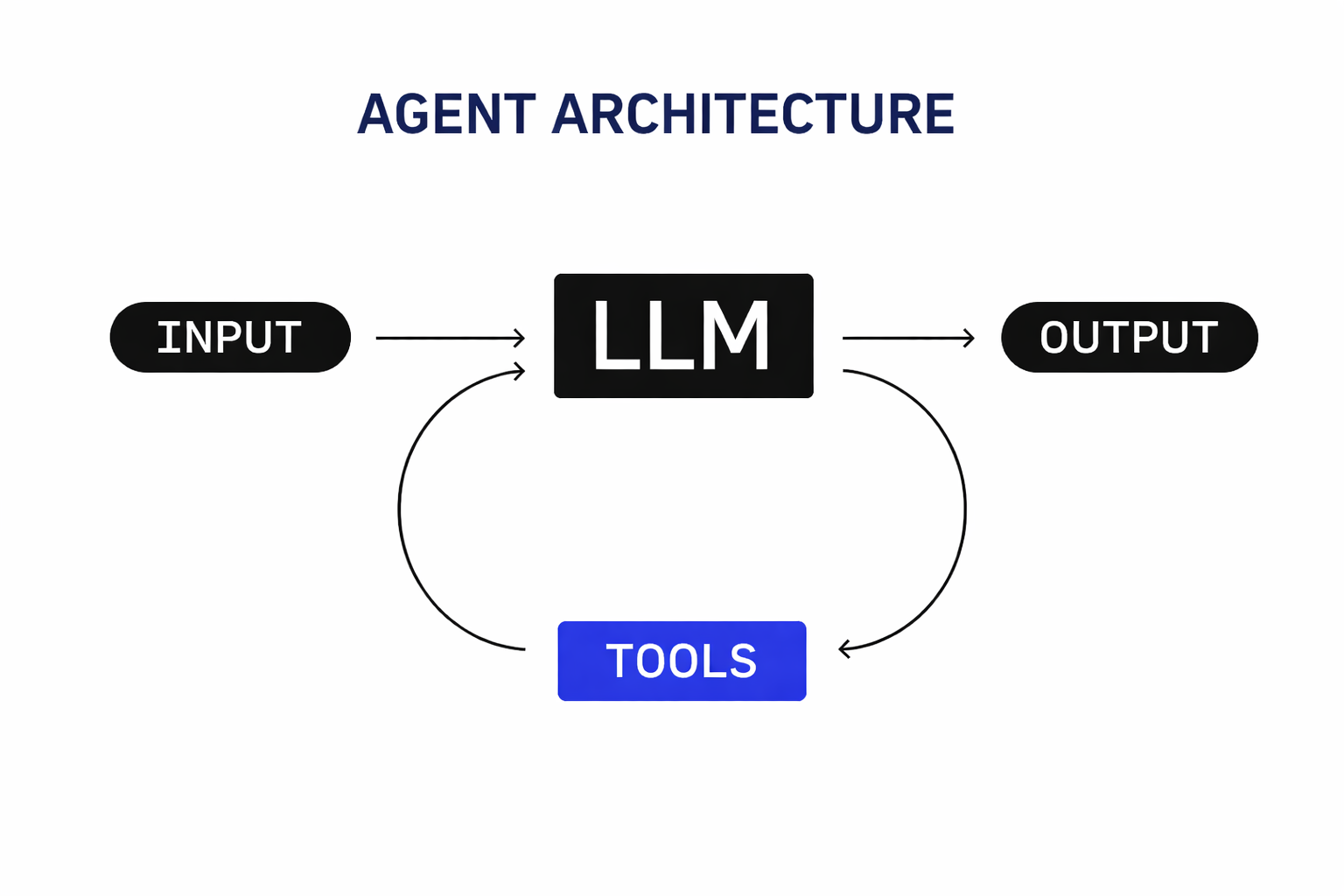
Strip away the branding and every framework on this list gives you the same core thing: an agent loop that calls a model, lets it pick a tool, runs the tool, and feeds the result back in until the goal is done. The framework’s job is the wiring around that loop: tool definitions, structured outputs, sessions and memory, tracing, MCP connections, and patterns for coordinating more than one agent, like handoffs.
An AI agent framework is a library for defining agents: the loop that calls a model, the tools the agent can use, its prompts and memory, and how multiple agents coordinate. The framework handles the wiring so you write the logic. Running the result reliably in production is a separate layer, called the agent runtime.
Do you need one at all? For a small project, honestly, no. An agent is a loop around an LLM with tool calls, and you can write one in about a hundred lines. Frameworks earn their keep when you want structured outputs, sessions, tracing, multi-agent coordination, and MCP wiring without building and maintaining all of it yourself.
What changed in 2026
If you last looked at this space in 2024 or 2025, here’s what’s different:
- Consolidation. Microsoft merged AutoGen and Semantic Kernel into Agent Framework 1.0, which went GA in April 2026. Two well-known names became one, and both migration paths lead there.
- Everyone hit 1.0. LangGraph reached 1.0 in late 2025. Google’s ADK went stable across four languages, with ADK 2.0 in beta. Mastra hit 1.0 in January, Strands shipped its TypeScript 1.0 in April, PydanticAI is on 2.x, and Vercel released AI SDK 7 in June. The experimentation phase is over; these are maintained, versioned tools now.
- MCP became the default. Every framework on this list can consume MCP servers for tools, which means your tool integrations stop being a reason to pick (or stay stuck on) a framework. A2A, Google’s agent-to-agent protocol, is following the same path for cross-agent communication, with native support in ADK and Microsoft Agent Framework.
- Durability became a framework concern. PydanticAI now co-maintains durable execution integrations with Temporal and Restate. Vercel’s AI SDK 7 added durable workflows. OpenAI shipped a harness for long-running tasks. The framework teams are saying the same thing we’ve been saying: the loop needs to survive production.
- The Agent Builder shutdown. OpenAI announced in June that Agent Builder and Evals wind down on November 30, 2026, pointing builders back to code. Visual builders had a rough year. Code-first frameworks didn’t.
How we evaluated these frameworks
Six things, checked for every entry:
- Language and type safety. What languages are first-class, and does the framework catch mistakes before runtime?
- Developer experience. How much code stands between you and a working agent?
- Multi-agent support. Are coordination patterns (handoffs, crews, graphs, coordinators) built in?
- Tool ecosystem. MCP support, prebuilt tools, and A2A where it matters.
- Production path. What’s the story for deploying, tracing, and keeping runs alive?
- Backing and momentum. Who maintains it, and is adoption growing or fading?
The 10 best AI agent frameworks at a glance
| Framework | Language | Known for | Multi-agent | Behind it |
|---|---|---|---|---|
| LangGraph | Python, JS | Graph-based control | Yes — graphs, subgraphs | LangChain |
| OpenAI Agents SDK | Python, TS | Simplicity, handoffs | Yes — handoffs | OpenAI |
| Google ADK | Python, Go, Java, TS | Four languages, A2A | Yes — coordinators | |
| Microsoft Agent Framework | Python, .NET | AutoGen + SK merged | Yes — Magentic patterns | Microsoft |
| CrewAI | Python | Role-based crews + Flows | Yes — crews | CrewAI Inc. |
| PydanticAI | Python | Type safety | Basic | Pydantic team |
| Vercel AI SDK | TypeScript | Agents + UI streaming | Basic | Vercel |
| Mastra | TypeScript | Batteries-included TS | Yes — workflows | Mastra (ex-Gatsby) |
| Strands Agents | Python, TS | Model-driven loop | Yes | AWS |
| smolagents | Python | Code-first minimalism | Basic | Hugging Face |
1. LangGraph
LangGraph is the framework you reach for when the agent’s control flow matters as much as the agent itself. You define agents as graphs: nodes for reasoning and tools, edges for routing, checkpoints for state. That makes complex behavior (branching, retries within the flow, human pauses via interrupts) explicit instead of buried in a prompt. It reached 1.0 with a stable core, has the largest ecosystem of integrations through LangChain, and pairs with LangSmith for tracing and LangSmith Deployment for hosting.
The trade-off is the abstraction itself. Graphs are more to learn than a plain loop, and the LangChain ecosystem’s pace means docs and APIs have historically moved under your feet. Teams that need its control tend to love it; teams with simple agents can find it heavy.
Best for: Python teams building complex, stateful agents that need explicit control over every step.
2. OpenAI Agents SDK
The OpenAI Agents SDK is the shortest path from nothing to a working agent: agents, tools, handoffs, guardrails, and sessions in a small, readable API, in Python and TypeScript, MIT-licensed. The April 2026 update added built-in sandboxed execution, a harness tuned for long multi-tool tasks, and support for 100+ non-OpenAI models, with subagents and a code mode on the roadmap. Adoption is enormous, and most new agent tutorials you’ll find use it.
Two things to keep in mind. The SDK works best inside OpenAI’s ecosystem, and 2026 showed what platform dependence costs: Agent Builder and Evals shut down on November 30. The SDK itself is safe (it’s the recommended migration target), but build on the code, not the platform tooling around it.
Best for: teams that want a working agent this week, especially on OpenAI models.
3. Google ADK
The Agent Development Kit is Google’s code-first framework and the most seriously multi-language option: stable in Python, Go, Java, and TypeScript. ADK 2.0 (in beta) adds graph-based workflows, coordinator agents that manage subagents, and dynamic code-based flows. It’s also the home of A2A, the agent-to-agent protocol, so cross-vendor agent communication is native rather than bolted on. Agents built with ADK run the same locally and on Google’s managed Agent Runtime.
The trade-off: ADK is at its best inside Google’s platform. Everything works standalone, but the momentum, the docs, and the managed niceties all assume you’ll end up on Google Cloud eventually.
Best for: multi-language shops, Java and Go teams, and anyone who cares about A2A.
4. Microsoft Agent Framework
Microsoft Agent Framework is what AutoGen and Semantic Kernel became. Version 1.0 went GA in April 2026, combining AutoGen’s multi-agent research patterns (including Magentic-style orchestration) with Semantic Kernel’s enterprise features, in Python and .NET, MIT-licensed, with MCP and A2A built in. The 1.0 release includes an Agent Harness with production patterns (shell access, human-in-the-loop approvals, context management) as plug-in extensions, and it deploys cleanly to Foundry’s hosted agents if you want Microsoft to run it.
The trade-off is youth and gravity. It’s the newest 1.0 on this list, teams are still migrating from the two frameworks it replaced, and most of its pull assumes an Azure and .NET world.
Best for: .NET and Azure organizations, and anyone currently on AutoGen or Semantic Kernel.
5. CrewAI
CrewAI’s model is teams: you define agents with roles, goals, and backstories, group them into crews, and let them collaborate on a task. For structured work, Flows add event-driven, step-by-step control with single LLM calls where you don’t need a full crew. The numbers are hard to argue with: CrewAI reports use at 60% of the US Fortune 500 and around two billion agent executions over the past year, and the changelog is busy (June 2026 added pluggable memory and RAG backends, a Chat API for conversational flows, and scoped runtime state for concurrent runs). Enterprises can use the managed AMP platform or self-host with Factory.
The trade-off: the role-play abstraction is great for exploration and rough for precision. Flows exist exactly because crews alone can be hard to steer, so expect to use both.
Best for: teams that think in collaborating role-based agents, and want a fast path from idea to demo.
6. PydanticAI
PydanticAI brings the discipline of Pydantic to agents: typed inputs, validated structured outputs, dependency injection, and errors caught where you want them, at development time. It’s from the team behind the validation library most of the Python AI stack already uses, it’s model-agnostic, and it’s moved fast without breaking its core promise (version 2.1 shipped in June 2026). Notably, it treats production seriously: the team co-maintains durable execution integrations with Temporal and Restate, so long-running agents have an official path to surviving failures.
The trade-off is scope. It’s Python-only, and multi-agent coordination is thinner than LangGraph’s or CrewAI’s. PydanticAI wants to make one agent correct more than it wants to orchestrate ten.
Best for: Python teams that care about type safety and validated outputs above all.
7. Vercel AI SDK
The Vercel AI SDK is how a large share of TypeScript developers met agents. It started as the standard way to stream model responses into React apps, then SDK 6 introduced a first-class Agent abstraction, and SDK 7 (June 2026) turned it into a full agent toolkit: tool approvals, durable workflows, MCP support, and multimodal agents across text, audio, and real-time. Every major provider works out of the box, and the UI integration remains the best in the business.
The trade-off is gravity. It shines inside a Next.js/React product with Vercel deployment; as a standalone backend agent framework it’s serviceable but not the point.
Best for: TypeScript teams building agents into web products, especially on Next.js.
8. Mastra
Mastra is the batteries-included TypeScript option: agents, workflows, RAG, memory, and observability in one framework, from the team that built Gatsby. It hit 1.0 in January 2026, raised a $22M Series A in April, and grew from roughly 60,000 monthly downloads in early 2025 to about 1.8 million by February 2026, with production users like Brex and Sanity. A unified router connects it to 1,000+ models, and tools are shareable across agents via MCP.
The trade-off is the other side of “batteries included”: it’s a bigger commitment than the AI SDK, and the ecosystem around it is younger than LangChain’s. A 1.0 from January is stable, not battle-worn.
Best for: TypeScript teams that want one framework for agents, workflows, and RAG instead of assembling pieces.
9. Strands Agents
Strands Agents is AWS’s open-source framework, built on a simple idea: let the model drive the loop instead of hand-coding orchestration. You give it a model, tools, and a prompt, and the framework gets out of the way. It passed 25 million downloads in its first year, shipped a TypeScript 1.0 in April 2026, and the June 2026 release added context management that roughly halves token costs, a sandboxed Strands Shell, and an Evals 1.0 with chaos testing and red teaming. It’s also the framework AWS pairs with AgentCore, without requiring it.
The trade-off: the community is newer than LangChain’s or CrewAI’s, and while Strands runs anywhere, its center of mass is unmistakably AWS.
Best for: AWS-first teams, and anyone who wants a minimal model-driven loop with a serious evals story.
10. smolagents
smolagents is Hugging Face’s answer to framework fatigue: the core logic fits in about a thousand lines, and its signature idea is code agents, where the agent writes Python snippets as its actions instead of emitting JSON tool calls. Hugging Face reports that approach cuts steps and LLM calls by around 30% on multi-step tasks. It’s model-agnostic in the fullest sense, including local and open models, which makes it a favorite for teams that don’t want a cloud dependency in the loop.
The trade-off is that minimalism is the product. Sessions, tracing, deployment, coordination at scale: that’s on you. It’s a sharp tool, not a platform.
Best for: developers who want the smallest possible core, open or local models, and full control.
A framework is not a runtime
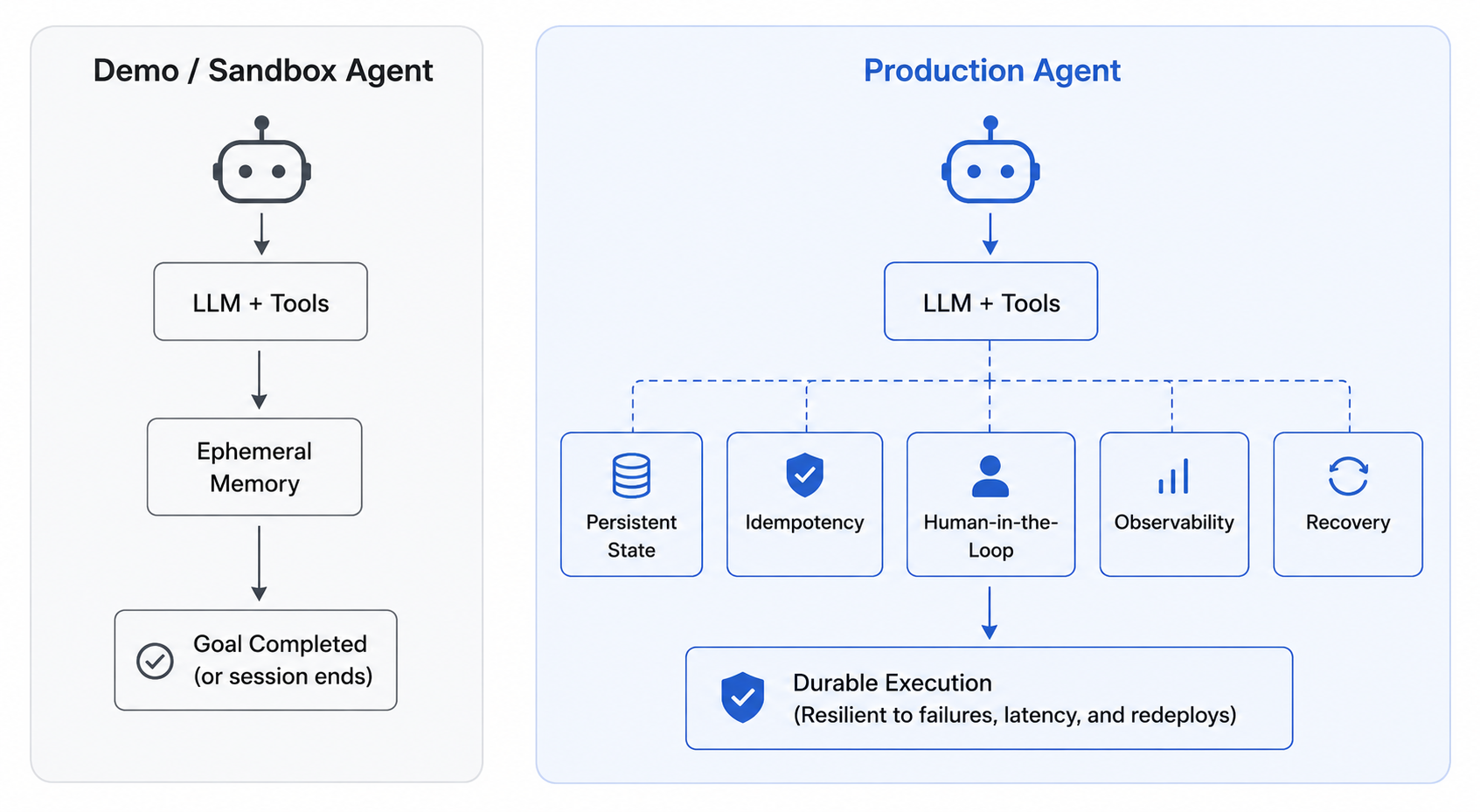
Whichever framework you pick, be clear about what you’re getting: a well-defined agent. The loop itself still runs inside your process, and production is where that shows. A deploy or a crash halfway through a run loses the agent’s progress unless something outside the process owns the state. That’s why the framework teams keep shipping durable execution integrations rather than pretending the problem away.
This layer is the part we work on. Agentspan is an open-source durable runtime, and agents from LangGraph, the OpenAI Agents SDK, and Google ADK pass into it unchanged:
from agentspan.agents import run

# `graph` is the compiled LangGraph agent you already have
result = run(graph, "Summarize this week's support tickets")
print(result.output["result"])
There are walkthroughs for each: LangGraph, OpenAI Agents SDK, and Google ADK. And the full comparison of the runtime layer, including the hyperscaler options, is in best AI agent runtime platforms in 2026.
How to choose an AI agent framework in 2026
Start from your constraints, not the feature lists:
| If you… | Start with |
|---|---|
| need precise control over a complex flow, in Python | LangGraph |
| want the simplest path to a working agent | OpenAI Agents SDK |
| work across Java, Go, and TypeScript, or care about A2A | Google ADK |
| are a .NET or Azure organization | Microsoft Agent Framework |
| think in teams of role-based agents | CrewAI |
| want typed, validated agent outputs | PydanticAI |
| build agents into a Next.js or React product | Vercel AI SDK |
| want one TypeScript framework for agents, workflows, and RAG | Mastra |
| are AWS-first | Strands Agents |
| want the smallest core, or local models | smolagents |
And relax a little: this choice is more reversible than it used to be. Agents are code, MCP has decoupled tools from frameworks, and runtimes accept agents from multiple frameworks. Pick one that fits your language and team, ship something, and revisit when you actually hit a wall.
FAQ
Which AI agent framework is best in 2026?
There’s no single best AI agent framework. For most Python teams, the practical shortlist is LangGraph (control), the OpenAI Agents SDK (simplicity), and CrewAI (multi-agent teams). For TypeScript, it’s the Vercel AI SDK or Mastra. Enterprise .NET and multi-language shops should look at Microsoft Agent Framework and Google ADK first.
Is LangGraph better than CrewAI?
They solve different problems. LangGraph gives you explicit, graph-level control over every step, which suits complex, stateful flows. CrewAI gets a team of role-based agents collaborating quickly, with Flows for the structured parts. Both are proven at scale. Pick by whether your problem looks like a flowchart or a team.
Are AutoGen and Semantic Kernel deprecated?
They merged. Microsoft Agent Framework 1.0 (GA April 2026) combines AutoGen’s multi-agent patterns with Semantic Kernel’s enterprise features, and Microsoft provides migration guides from both. Existing code keeps working, but new features and fixes land in Agent Framework, so new projects should start there.
What is the difference between MCP and A2A?
MCP (Model Context Protocol) connects an agent to tools and data: one agent, many capabilities. A2A (Agent2Agent) connects agents to other agents, including agents built by different vendors on different frameworks. They’re complementary, and by 2026 most frameworks support MCP, with A2A support growing.
What is the difference between an agent framework and an agent runtime?
A framework defines the agent: loop, tools, prompts, coordination. A runtime executes that definition durably, with state that survives crashes and deploys, retries, approvals, and full traces. You need both for production. We compare the runtime side in best AI agent runtime platforms in 2026.
Do I need a framework to build an AI agent?
No. An agent is a loop around a model with tool calls, and a hundred lines of Python gets you one. Frameworks become worth it when you need structured outputs, sessions, tracing, MCP integrations, or multiple agents working together, which is most production projects, eventually.
Next steps
- Best AI agent runtime platforms in 2026 — the layer that runs whichever framework you pick
- Run a LangGraph agent durably
- Run an OpenAI Agents SDK agent durably
- Run a Google ADK agent durably
- Agentspan on GitHub
- Join the Agentspan Discord community