Best AI Agent Runtime Platforms 2026: Top 10 Compared
Your agent works great in the demo. Three weeks into production, a pod restarts halfway through a run, eighteen tool calls of progress disappear, and nobody can say what the agent was doing when it died. If you’re searching for the best AI agent runtime platform in 2026, chances are something like this already happened to you.
You’re not alone. Only about 23% of organizations have taken an agent past the pilot stage and into production, and Gartner expects over 40% of agentic AI projects to be canceled by the end of 2027. The usual reasons are exactly the things a runtime is supposed to handle: no recovery, no governance, no audit trail.
What this covers
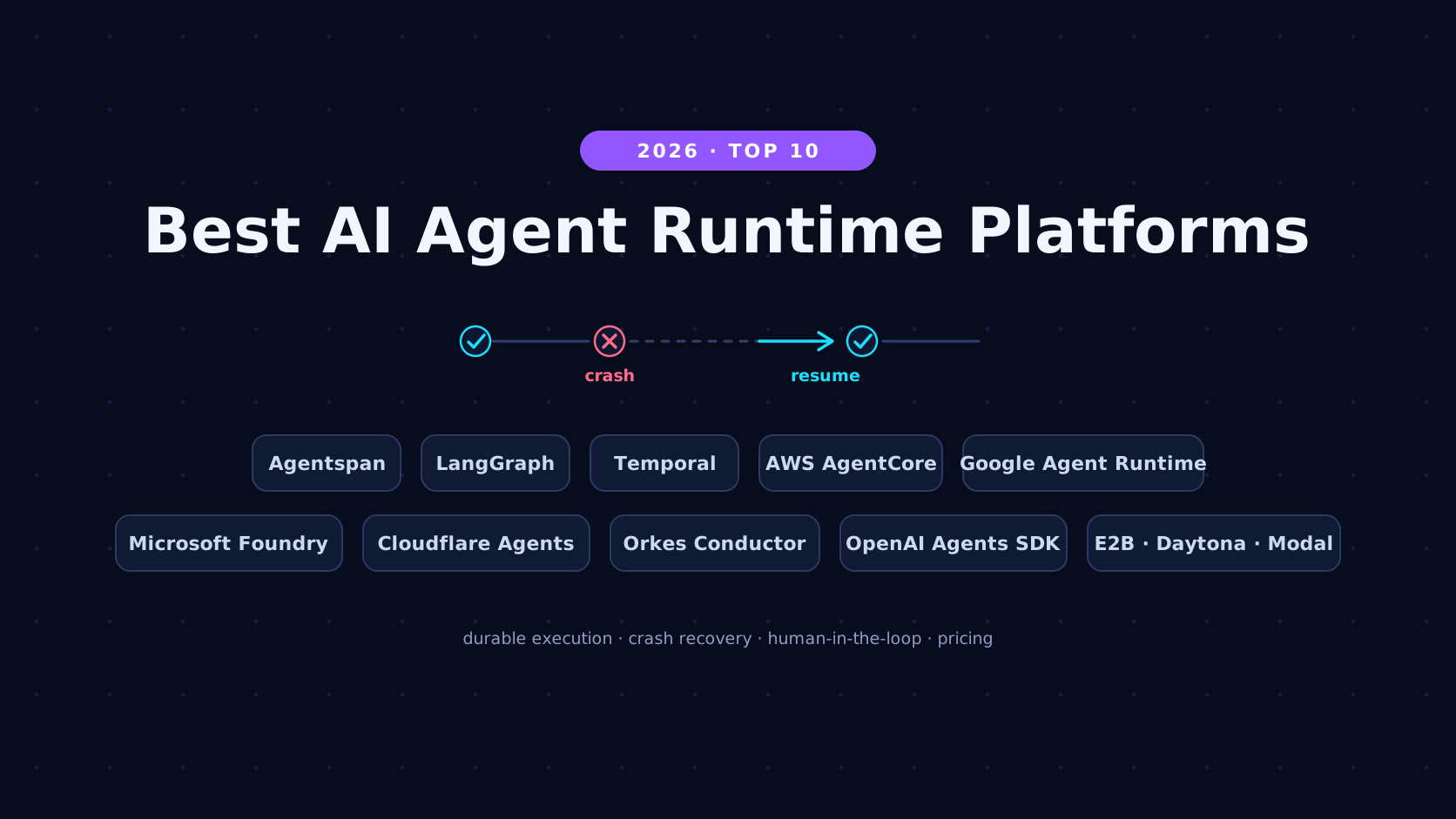
A comparison of the 10 best AI agent runtime platforms in 2026: what separates a durable runtime from a framework or a sandbox, and how Agentspan, LangGraph, Temporal, AWS AgentCore, Google's Agent Runtime, Microsoft Foundry, Cloudflare Agents, Orkes Conductor, the OpenAI Agents SDK, and sandbox runtimes like E2B compare.
Key takeaways
- 1Frameworks build agents. Runtimes run them, and durable execution is the difference
- 2Checkpointing is not durable execution: saves between nodes still replay every tool call inside a failed node
- 3Hyperscaler runtimes give you managed identity, memory, and observability in exchange for lock-in
- 4'Agent runtime' also means sandboxes like E2B and Modal, which complement durable runtimes rather than replace them
- 5Only about 23% of organizations run agents in production, and missing recovery and governance is a big part of why
One thing trips people up right away when they compare these platforms: “agent runtime” means two different things in 2026, depending on who you ask. To orchestration people, it’s the layer that owns an agent’s state, retries, and approvals. To infrastructure people, it’s the sandbox where agent-generated code executes. Both are real, and both are on this list. So let’s define the terms before comparing anything.
What is an AI agent runtime?
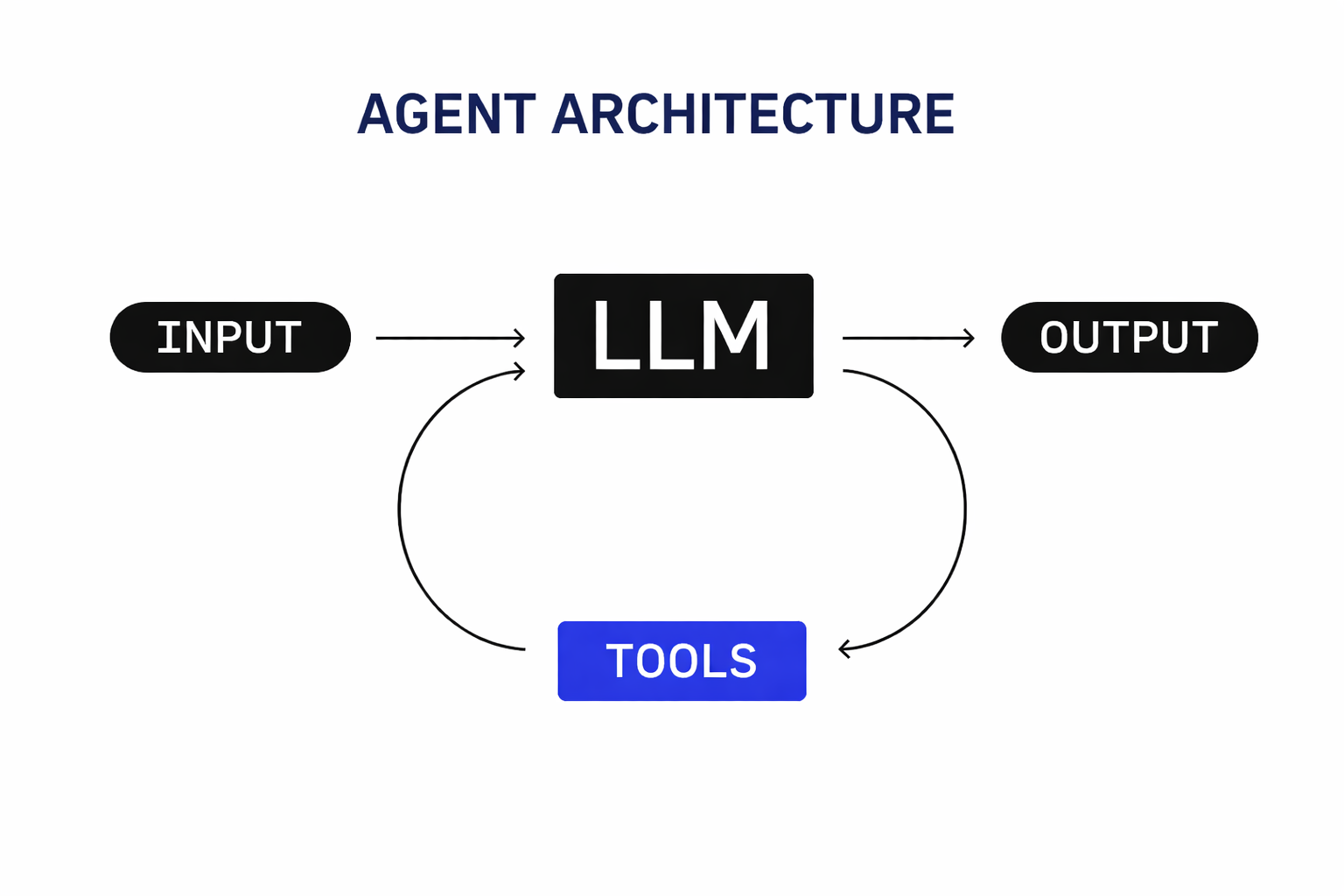
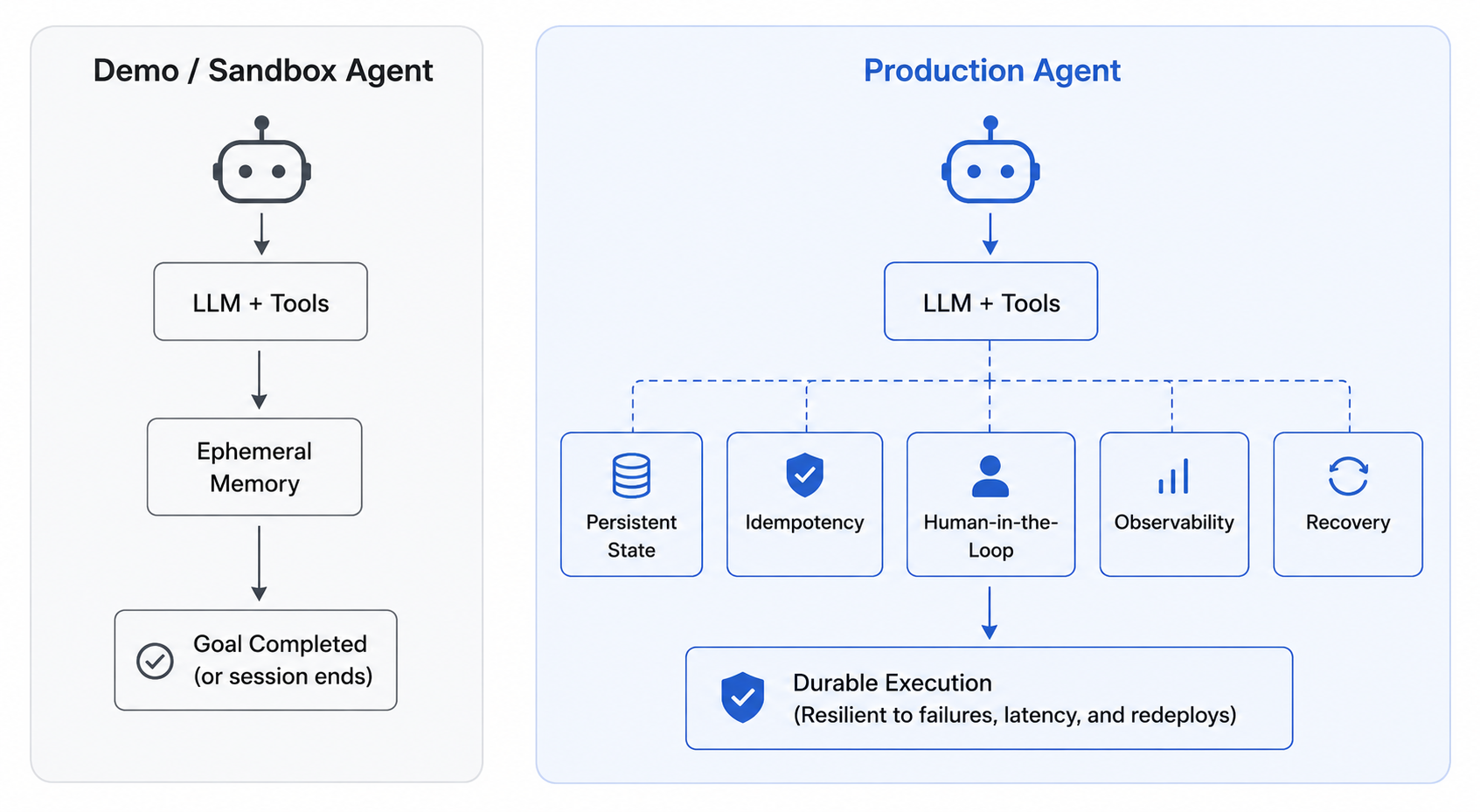
Every agent framework, whether that’s LangGraph, the OpenAI Agents SDK, or Google’s ADK, gives you the same core thing: an agent loop that calls a model, picks a tool, runs it, and repeats until the goal is done. Frameworks are good at defining that loop. What they don’t do, on their own, is take care of the loop when the process running it dies.
An AI agent runtime is the execution layer that owns an agent’s run. It keeps state outside your process, retries failed steps, resumes crashed runs without repeating completed work, pauses for human approval, and records every model and tool call. Frameworks define agents. Runtimes keep them running.
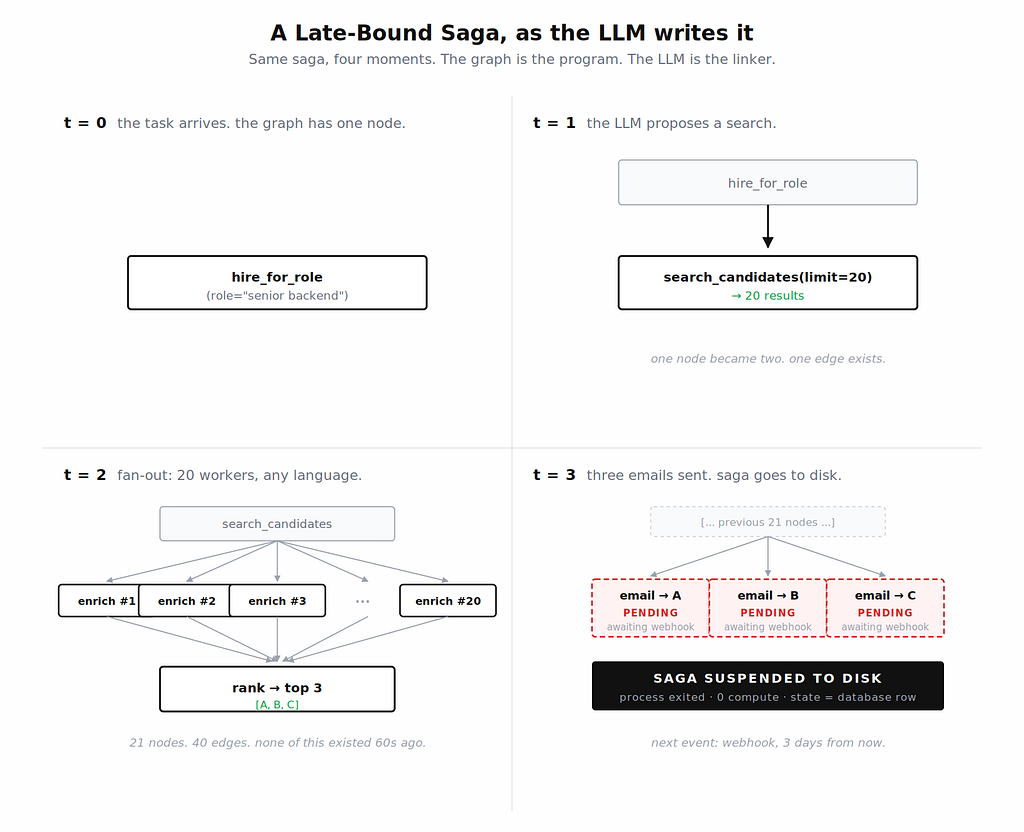
The capability that defines the category is durable execution. An in-process agent loop keeps everything that matters in memory: the conversation history, the tool results, where it is in the plan. A deploy, an out-of-memory kill, or a dropped connection wipes all of it, and every completed LLM call gets re-run (and re-billed) when you retry. A durable runtime keeps that state on a server or in a journal instead, so the run outlives the process that started it. We tested this failure mode in detail in why AI agents lose work when they crash.
Why does this matter more in 2026? Because agents stopped being chatbots. Gartner projects that 40% of enterprise applications will include task-specific agents by the end of 2026, up from under 5% in 2025. An agent that spends two hours working through billing APIs can’t live in a process that a deploy can kill. The infrastructure world has started naming this layer directly: the rise of the agent runtime.
How we evaluated these platforms
Six criteria, applied the same way to every entry:
- Durable execution. When a run fails, does it resume from the last completed step? Or from the last checkpoint before the step, re-running everything in between? This matters more than anything else on a spec sheet.
- Crash recovery. Can any process, on any machine, reconnect to an in-flight run by ID and pick up where it left off? See crash recovery.
- Human-in-the-loop. Are approval gates built in, with state held for as long as a person needs to decide? Or is that a pattern you build yourself?
- Framework interoperability. Can you bring the agent you already wrote, or do you have to rewrite it in the platform’s abstractions?
- Observability. Does it record a per-step trace of every LLM call and tool call (agent observability), or just aggregate metrics?
- Pricing and lock-in. What’s the license, can you self-host, and can you predict the bill?
Agentspan is our product, and Orkes Conductor (number 8 on this list) is the engine it runs on. Read those two entries with that in mind, and check every claim against the linked docs.
The 10 best AI agent runtime platforms at a glance
Here’s the short version. Details, trade-offs, and verdicts follow for each platform.
| Platform | Durable execution | Built-in HITL | Framework interop | Open source | Pricing model |
|---|---|---|---|---|---|
| Agentspan | Yes — server-side runs | Yes — approval gates | LangGraph, OpenAI SDK, ADK, native | MIT | Free, self-host |
| LangGraph + LangSmith Deployment | Node checkpoints | Via interrupts | LangGraph | MIT (core) | $/node + standby |
| Temporal | Yes — event replay | Build your own | Any (SDK-level) | MIT (server) | Cloud usage or self-host |
| AWS Bedrock AgentCore | Managed sessions | Via primitives | Strands, LangGraph, CrewAI | No | $/vCPU-hr + per-component |
| Google Agent Runtime + ADK | Managed sessions | Via ADK patterns | ADK + others | ADK: Apache-2.0 | $/vCPU-hr + $/GB-hr |
| Microsoft Agent Framework + Foundry | Sessions + harness | Yes — harness approvals | MAF (Python/.NET) | MIT (framework) | Foundry compute |
| Cloudflare Agents SDK | Durable Objects + fibers | Build with primitives | TypeScript only | MIT (SDK) | Requests + duration |
| Orkes Conductor | Yes — workflow engine | Yes — human tasks | Polyglot workers | Apache-2.0 (core) | OSS or cloud |
| OpenAI Agents SDK + AgentKit | No — bring a runtime | Approvals in SDK only | OpenAI + 100+ models | MIT | Free SDK |
| E2B / Daytona / Modal | No — sandboxes | No | Any | E2B, Daytona OSS | $/vCPU-hr |
1. Agentspan — open-source durable agent runtime
Full disclosure first: Agentspan is our product, so read this entry with that in mind, then check the claims against the docs. Agentspan is an MIT-licensed durable agent runtime. It works by compiling your agent definition into a workflow on Conductor, the battle-tested orchestration engine used by Netflix, Tesla, and LinkedIn that has already powered billions of executions in production.
The core idea is that the agent loop belongs on a server, not in your process. When you run an agent, the Agentspan server owns the run. Every LLM call and tool call becomes a durable, retried, recorded step, and your @tool functions execute in distributed workers that poll for tasks. Your process can crash, redeploy, or move to another machine, and the run keeps going.
pip install agentspan
agentspan server start
from agentspan.agents import Agent, AgentRuntime, tool

@tool
def get_weather(city: str) -> str:
    """Get current weather for a city."""
    return f"72°F and sunny in {city}"

agent = Agent(
    name="weatherbot",
    model="openai/gpt-4o",
    tools=[get_weather],
)

with AgentRuntime() as runtime:
    result = runtime.run(agent, "What's the weather in NYC?")
    result.print_result()
You don’t have to use the native API either. A compiled LangGraph graph, an OpenAI Agents SDK agent, or a Google ADK pipeline passes straight into run() and gets durability without a rewrite. And if your process dies mid-run, the run doesn’t. You can reconnect from any machine with the run’s ID:
from agentspan.agents import AgentRuntime, AgentHandle

with AgentRuntime() as runtime:
    # if the agent has @tool functions, register workers first:
    # runtime.serve(agent, blocking=False)
    handle = AgentHandle(workflow_id="<execution-id>", runtime=runtime)
    result = handle.stream().get_result()
    print(result.output["result"])
Because the server saves each step, a crash after tool call 18 resumes at tool call 19. Completed work never runs twice. Human approval is one decorator argument: @tool(approval_required=True) pauses the run at that call, holds state for as long as the reviewer needs, and resumes on handle.approve() or handle.reject(reason). There’s a full example in the human-in-the-loop docs. You also get eight multi-agent strategies (sequential, parallel, handoff, router, swarm, and more) and a visual UI that shows every step of every run.
What to keep in mind: Agentspan is young (v0.1.x, released in 2026) and the community is still small. The authoring SDK is Python-first; workers can be written in other languages, but the Agent API can’t. And you run a server yourself, one command locally or Docker and Kubernetes in production, instead of buying a managed service.
Best for: teams that want open-source durable execution without rewriting the agents they already built.
2. LangGraph + LangSmith Deployment
If your agents are already LangGraph graphs, LangChain’s own stack is the shortest path to a managed runtime. LangGraph reached 1.0 with a stable core, and LangSmith Deployment (renamed from LangGraph Platform in October 2025) runs those graphs as managed or self-hosted services. You get durable execution through checkpointing, interrupts that let a run wait for human input without blocking threads, and tight integration with LangSmith tracing. Pricing is public: a free self-hosted tier up to 100,000 node executions a month, then about $0.001 per node plus about $0.0036 per standby minute on the Plus plan ($39 per user per month), as of July 2026.
There’s one caveat, and we’ve written about it before: checkpoints save between nodes, not inside them. LangGraph’s own persistence docs describe restarting “from the last successful step,” but in a typical ReAct-style graph the reasoning node is the agent, and it makes all the tool calls. If that node fails after 18 tool calls, all 18 run again. You can work around this by designing more granular graphs. It’s just work the runtime doesn’t do for you.
Best for: teams already building in LangGraph who want first-party deployment with the fewest new moving parts.
3. Temporal
Temporal was doing durable execution long before agents were the use case. It’s an open-source workflow engine (the server is MIT-licensed) built on event-history replay: every step gets journaled, and a crashed worker replays the journal to resume exactly where the run stopped. Payments and infrastructure teams have run it for a decade, which is why agent teams trust it. In 2026 Temporal leaned into agents directly. The OpenAI Agents SDK integration went GA in March, and Replay 2026 added serverless workers on AWS Lambda and Workflow Streams, which is durable token streaming for live agent UIs. The company also raised a $300M Series D in February 2026, at a $5B valuation, led by a16z.
Two trade-offs. Workflow code has to be deterministic (no bare datetime.now(), no unrecorded randomness), and that’s a real learning curve. And Temporal is general-purpose: the agent semantics, meaning the loop, approvals, and memory, are yours to build on top, usually with the SDK integrations.
Best for: teams that already run Temporal, or that want the most battle-tested durable core and are happy to build the agent layer themselves.
4. AWS Bedrock AgentCore
Amazon Bedrock AgentCore is the most complete managed offering. It’s a set of building blocks (Runtime, Gateway, Memory, Identity, Browser, Code Interpreter, Policy, and Observability) that work with any framework, including Strands Agents, LangGraph, and CrewAI, and any model. In 2026 it added a managed harness (define an agent with CreateHarness, call it with InvokeHarness, no orchestration code or container needed), a managed Web Search tool, Guardrails enforcement inside Policy, and a preview of agent-initiated payments. Sessions run in isolated microVMs, and pricing is consumption-based: about $0.0895 per vCPU-hour plus $0.00945 per GB-hour for Runtime, as of July 2026.
The trade-off is the bill and the boundary. AgentCore spans roughly a dozen separately metered components, so estimating cost before you have production traffic is hard. And identity, memory, and gateway all tie you deeper into AWS.
Best for: AWS-committed enterprises that want managed building blocks for everything and have a platform team to assemble them.
5. Google Agent Runtime + ADK (Gemini Enterprise Agent Platform)
Google replaced Vertex AI outright at Cloud Next 2026. Agent work now lives in the Gemini Enterprise Agent Platform, and two pieces of it matter for this list. The first is the Agent Development Kit (ADK), which is code-first and stable across Python, Go, Java, and TypeScript, with ADK 2.0 (in beta) adding graph-based workflows. The second is the re-engineered Agent Runtime, now GA, with the strongest specs of the managed group: sub-second cold starts, agents that keep state and run on their own for up to seven days, 3,000 agents per project, Sessions and Memory Bank at GA, bring-your-own containers, and a guarantee that ADK agents behave the same locally and in the cloud. It’s also where the A2A (Agent2Agent) protocol lives. Pricing is about $0.0864 per vCPU-hour plus $0.0090 per GB-hour, as of July 2026.
The cost is churn and lock-in. The platform has been renamed twice in about eighteen months (Agent Builder, then Vertex AI Agent Engine, now Gemini Enterprise Agent Platform), which is a real tax on anyone evaluating it. And the managed conveniences tie your agents to Google Cloud.
Best for: GCP shops standardizing on ADK and A2A that want the longest-running managed agents available.
6. Microsoft Agent Framework + Foundry Agent Service
Microsoft spent 2026 consolidating. Agent Framework 1.0 went GA in April 2026 and merged AutoGen’s multi-agent patterns with Semantic Kernel’s enterprise features into one open-source SDK (MIT) for Python and .NET, with A2A and MCP support built in. The 1.0 release ships an Agent Harness: production patterns like shell access, human-in-the-loop approvals, and context management as plug-in extensions. At Build 2026, Foundry Hosted Agents reached GA. You package your agent as a container and deploy it on Foundry-managed infrastructure with identity, managed session state, scale-to-zero, and observability. CodeAct (alpha) hints at where this is going: the model writes one Python program that calls tools inside an isolated Hyperlight micro-VM instead of going back and forth over many model turns.
The trade-offs: it’s the youngest 1.0 on this list, teams are still migrating from Semantic Kernel and AutoGen, and most of the value assumes you live in Azure and Entra.
Best for: .NET and Azure organizations, especially ones already on Semantic Kernel or AutoGen.
7. Cloudflare Agents SDK
Cloudflare took a different path: every agent is a Durable Object, an addressable actor with its own SQLite database. An idle agent hibernates and costs nothing, then wakes when something happens: an HTTP request, a WebSocket message, a scheduled alarm, or an inbound email. State isn’t bolted on. It’s where the agent lives. The Agents SDK already powers thousands of production agents, and Project Think (2026, @cloudflare/think) adds the production pieces: durable execution with fibers, isolated sub-agents, persistent sessions, sandboxed code execution, and self-authored extensions.
The constraint is the platform itself. It’s TypeScript on Cloudflare’s edge runtime. There’s no Python story, and heavy data or ML tooling has to live somewhere else, reached over the network.
Best for: TypeScript teams running thousands of small, stateful, mostly-idle agents (per-user assistants, chat, email triage) where hibernation keeps the bill near zero.
8. Orkes Conductor
Disclosure again, because it matters here: Conductor is the engine Agentspan runs on. Same execution layer, different API. Orkes Conductor is the orchestration platform from the original architects of Netflix Conductor, and in April 2026 Orkes raised a $60M Series B as more teams used it to put AI in production. Agentic workflows on Conductor get everything a decade of microservice orchestration already worked out: durable state, per-step retries and timeouts, human tasks that wait as long as they need to, full execution tracing, enterprise governance, and workers in Java, Python, Go, and JavaScript. Agents become steps inside your business workflows, next to the payment task, the ERP update, and the human review, instead of living on their own island.
The trade-off is the authoring model. You think in workflows and tasks, not Agent() objects. If you want an agent-first developer experience on this same engine, that’s literally why Agentspan exists.
Best for: enterprises embedding agents inside governed business processes like claims, provisioning, and order flows.
9. OpenAI Agents SDK + AgentKit
The OpenAI Agents SDK is probably the most-used agent framework in the world, and its April 2026 update moved it closer to runtime territory: built-in sandboxed execution, a model-native harness tuned for long multi-tool tasks on GPT-5-class models, support for 100+ non-OpenAI models, and subagents plus a code mode on the roadmap. The developer experience (handoffs, guardrails, sessions, tracing, in Python and TypeScript, MIT-licensed) is excellent.
Two things to know before betting on it. First, OpenAI announced on June 3 that Agent Builder and Evals shut down on November 30, 2026, and its migration guidance points code workflows back to the SDK. If 2026 taught agent teams one lesson, it’s to build on pieces you can take with you. Second, the SDK is a framework, not a durable runtime. The loop still runs in your process, so give it a durable home: Temporal’s integration is GA, and an Agents SDK agent passes into Agentspan’s run() unchanged.
Best for: teams building on OpenAI’s models and tooling, with a durable runtime underneath.
10. E2B, Daytona, and Modal — sandbox runtimes
These three are the other kind of “agent runtime”: the isolation layer where agent-written code executes. This is what most agent runtime tools roundups actually compare. E2B runs open-source Firecracker microVMs with roughly 150 ms cold starts and a dedicated kernel per sandbox. Daytona starts sandboxes in under about 90 ms, raised a $24M Series A in February 2026, and positions itself as the compliance-first option for regulated industries. Modal runs gVisor-isolated sandboxes defined at runtime and is the one that puts GPUs inside the sandbox. Pricing for all three clusters around five cents per vCPU-hour, as of July 2026.
Here’s what none of them do: remember the run. If the process orchestrating your agent dies, the sandbox has no idea what the agent was doing. Sandboxes answer “where does generated code execute safely?” Durable runtimes answer “what happens when the process dies?” Production stacks increasingly use both, with a durable runtime owning the loop and sending risky code into a sandbox.
Best for: any team whose agents run untrusted or generated code, paired with (not instead of) a durable runtime from this list.
How to choose an agent runtime in 2026
Skip the category labels and ask four questions. Where does the agent loop run when your process dies? Can a human approve a step without the run timing out? Can you bring the framework you already use? Can you predict the bill? If you’re coordinating a multi-agent system, add a fifth: are the coordination strategies built in, or are they another thing you own?
| If you… | Start with |
|---|---|
| want open-source durable execution and already have agents in LangGraph, the OpenAI SDK, or ADK | Agentspan |
| are deep in the LangChain ecosystem | LangSmith Deployment |
| want the most battle-tested durable core and will build the agent layer | Temporal |
| are committed to one cloud | AgentCore (AWS), Agent Runtime (Google), or Foundry (Azure) |
| build TypeScript agents that idle most of the day | Cloudflare Agents SDK |
| need agents inside governed business workflows | Orkes Conductor |
| execute untrusted, agent-generated code | E2B, Daytona, or Modal — alongside a durable runtime |
Whatever you pick, make sure you have an exit: a runtime you can self-host, agents defined in portable code instead of a proprietary builder, and execution history you can export. The teams that got through 2026’s renames, deprecations, and shutdowns without rewrites were the ones whose agents were code running on a runtime they could swap, not configurations in someone else’s UI.
FAQ
What is an AI agent runtime?
An AI agent runtime is the infrastructure layer that executes agents in production. It keeps run state outside your process, retries and records every step, recovers crashed runs, and pauses for human approval. The model decides what to do next. The runtime makes sure that work survives restarts, deploys, and failures.
What is the difference between an agent framework and an agent runtime?
A framework (LangGraph, the OpenAI Agents SDK, Google ADK) defines the agent: its loop, tools, prompts, and handoffs. A runtime executes that definition durably, with server-side state, retries, crash recovery, approvals, and traces. You need both, and good runtimes accept agents from any framework rather than forcing a rewrite. We compare the framework side in best AI agent frameworks in 2026.
Is LangGraph an agent runtime?
LangGraph itself is a framework. LangSmith Deployment adds the managed runtime, with durable execution through node-boundary checkpointing. Work inside a node isn’t checkpointed, so a failed node replays in full. LangGraph graphs also run on independent runtimes such as Agentspan or Temporal if you want mid-run durability or self-hosting.
What is durable execution for AI agents?
Durable execution means an agent’s progress is saved step by step, outside the process running it. If the process crashes at step 47, the run resumes at step 47, and completed LLM calls and tool calls never run (or bill) twice. That’s what makes long-running, high-stakes agents practical to operate.
Do I still need a sandbox like E2B if I have an agent runtime?
Often, yes, because they solve different problems. A durable runtime protects the run: state, retries, recovery, approvals. A sandbox protects the machine: isolated execution for untrusted, agent-generated code. Many production stacks use a durable runtime for the loop and send code execution into a sandbox.
Which platforms can manage multi-agent AI systems?
Several on this list ship multi-agent coordination as a built-in feature. Agentspan has eight declarative strategies (sequential, parallel, handoff, router, swarm, and more), Microsoft Agent Framework includes Magentic-style orchestration patterns, Google’s ADK 2.0 adds coordinator agents and graph workflows, and the OpenAI Agents SDK popularized handoffs. On general-purpose engines like Temporal, you build the coordination yourself.
Which agent runtime platform is best in 2026?
There’s no single best agent runtime platform. It depends on your constraints. Agentspan is the strongest open-source choice for durability without rewriting existing agents (we’re biased, so check the docs). Temporal offers the most maturity, hyperscaler runtimes trade lock-in for managed integration, and sandboxes complement all of them.
Next steps
- Get started with Agentspan — a durable agent in under 60 seconds
- Crash and resume — the two-script durability walkthrough
- Human-in-the-loop — approval gates in one decorator argument
- Agentspan on GitHub
- Join the Agentspan Discord community